Best-in-class search engine marketing
Maximize your brand’s search performance and capture untapped demand with our audience-first, AI-enhanced search engine marketing.
We set the standard in SEM
Aligned to searcher intent, powered by machine learning, and steered by the brightest minds in the business, our strategic approach to paid search—and its seamless integration with related tactics—help brands drive powerful business outcomes throughout the funnel.
LET’S TALK SEM
The most effective SEM campaigns are mapped out in detail. That’s why we combine deep market insights, audience data, and strategic foresight to craft tailored account structures and search programs that align with your business goals to drive targeted traffic and boost conversions. From standard text-based search campaigns to Shopping ads and AI-powered tactics like Performance Max, our paid search offering will help you own the SERP and all relevant placements.
From initial setup to ongoing optimization, we manage every aspect of your SEM campaigns, leveraging data-driven insights, machine learning (always with strategic human direction), and continuous testing to maximize performance and deliver measurable results—season after season, year after year.
You have to feed the funnel in order to get anything out of it! That’s why we strategically attract and nurture high-quality leads through targeted full-funnel media programs, aligning your messaging with user intent across channels to create interest and demand. We then ensure your SEM program is built to effectively capture that demand and drive business growth.

Move your media forward with an award-winning agency

Forrester Wave
DAC Group was cited for its unique offering for multilocation brands.

Globee Awards
Female-Led Department of the Year for Jenna Watson, our SVP of Media.

Search Engine Land Awards
Best Local Search Marketing Initiative – PPC with our client The Fresh Market.
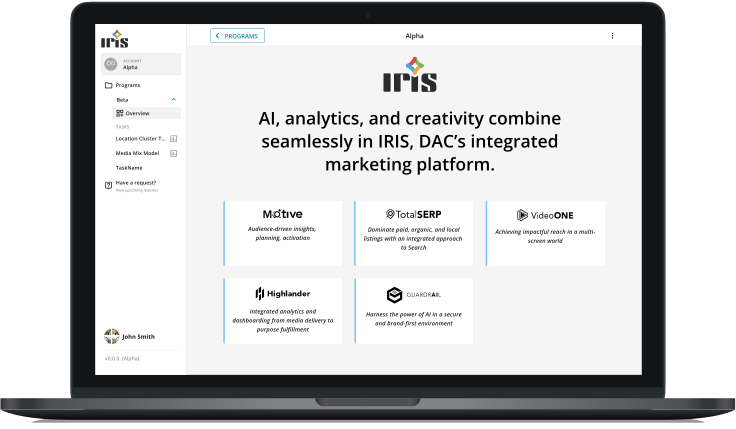
Say goodbye to silos
The data generated by paid search can be used to optimize campaigns. But why stop there? Reveal rich, actionable insights that inform bold decisions across your business with IRIS, our fully integrated marketing platform.
EXPLORE IRIS
Proprietary tech built for powerful outcomes

TotalSERP
Orchestrate cohesive search strategies to dominate across paid, organic, and local.

Motive
Take control of your media with audience-first insights, planning, activation, and reporting.

Guardrail
Supercharge AI productivity by streamlining interactions and maximizing efficiency.

Highlander
Streamline analytics and reporting, enhancing decision-making across marketing channels.
A recipe for powerful outcomes
SEM can drive impressive results as a standalone solution. But it becomes a game-changer when you combine it with other tactics, empowering teams to share insights, craft integrated solutions to complex challenges, and accelerate bigger and better outcomes—in search and beyond.
SEM in action

Make yourself heard: Optimizing PPC campaigns for voice search
- Paid search campaigns have to change as more users rely on voice-activated devices for online queries.
- Learn how to adjust your keyword strategy to align with natural language queries.
- Understand the integration of structured data and local SEO to improve your performance in voice search results.
READ THE POST
FAQ
SEM in generative search has to do more than harvest bottom-funnel demand now that search behavior is spreading across AI summaries, comparisons, and exploratory queries. It should defend high-intent moments, inform broader TotalSERP visibility, and adapt bidding, creative, and landing pages to how discovery is changing.
A TotalSERP paid search strategy means paid search is planned alongside SEO, local, shopping, brand protection, and emerging search features instead of managed as an isolated auction channel. The real objective is full-page visibility and smarter coverage of intent, not just incremental click volume.
Paid vs organic search allocation should follow intent, competitiveness, and business value, with paid owning high-stakes terms that need immediate control and SEO or local covering sustainable visibility where organic can win. The best split reduces overlap while protecting both efficiency and discoverability.
First-party data for SEM should sharpen audience signals, bidding decisions, exclusions, and value-based optimization at a time when platform defaults can miss business nuance. When search programs use CRM and lifecycle intelligence, spend is more likely to prioritize qualified revenue instead of shallow conversions.
Profitable SEM scaling usually stalls when spend grows faster than query quality, conversion economics, and measurement discipline. Healthy expansion comes from protecting margin, knowing which searches deserve aggressive bids, and using value-based bidding signals so growth does not outrun profitability.

Amplify your reach with media-forward campaigns.
Engage your audiences with local-forward strategies.
Make data-forward decisions for measurable results.
Drive outcomes with a performance-forward mindset.
Get ahead with AI-forward innovations.
Elevate your appeal with brand-forward solutions.
Amplify your reach with media-forward campaigns.
Engage your audiences with local-forward strategies.
Make data-forward decisions for measurable results.
Drive outcomes with a performance-forward mindset.
Get ahead with AI-forward innovations.
Elevate your appeal with brand-forward solutions.