What multi-location brands need to know about Local Service Ads
February 06, 2026
Kyle Harris
6 min
Technical
Share This
Subscribe
Share This
Subscribe
Local search has changed dramatically over the past few years. Organic results have been pushed further down the page, AI-powered answers are reshaping how people evaluate options, and users increasingly expect immediate, local solutions when they search. For multi-location service brands, this compression of visibility has made it harder to appear at the exact moment customers are ready to act.
Local Service Ads (LSAs) sit at the centre of this shift. They promise premium placement, high-intent leads and built-in trust signals. But while LSAs may look simple on the surface, scaling them effectively across dozens or even hundreds of locations introduces real operational and strategic complexity. Understanding how they work, and how they fit into a broader local strategy, is essential before leaning in.
What are Local Service Ads and why do they appear first in search results?
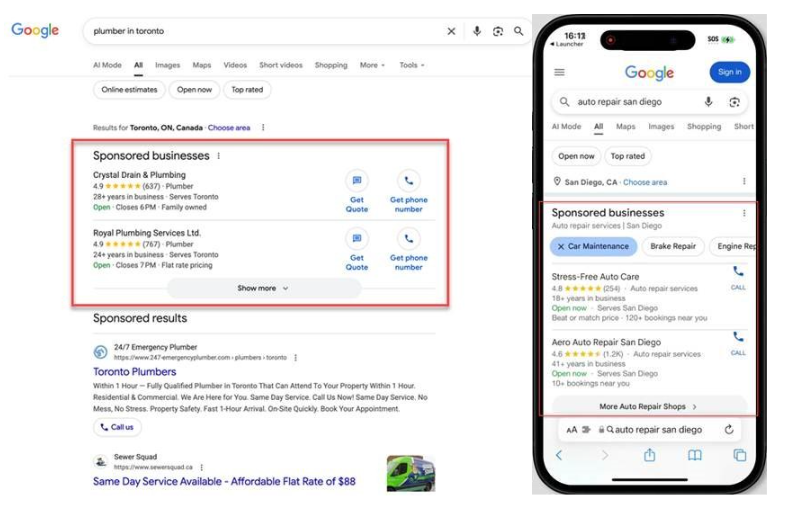
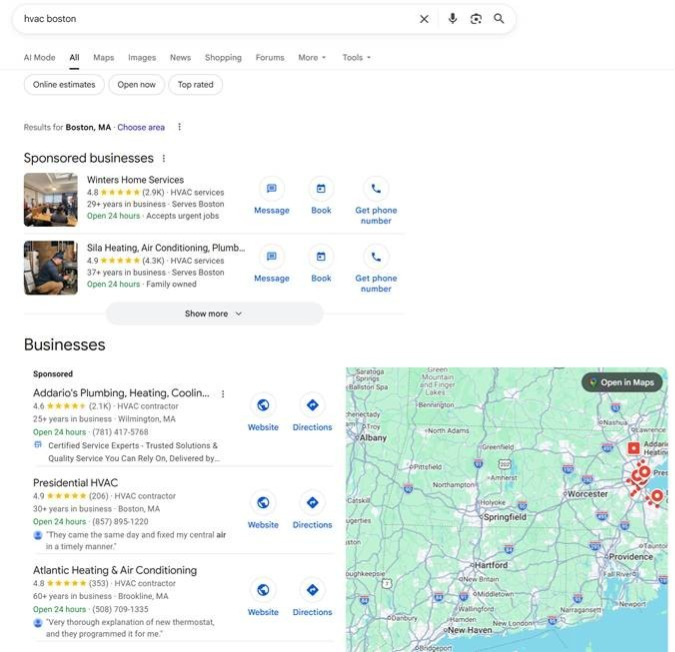
Local Service Ads are Google’s pay-per-lead advertising format for service-based businesses. When available, they appear at the very top of the search engine results page, above organic listings and most traditional paid ads, and give users a direct way to call, message or book a service.
What makes LSAs distinct is their combination of placement and trust. Each eligible advertiser displays Google’s verification badge alongside ratings and reviews, helping users quickly decide which businesses feel credible enough to contact. For high-intent searches such as “emergency plumber near me” or “local house cleaner”, this positioning often captures demand before users even scroll.
This placement can be incredibly valuable for multi-location brands, but it also means competition is fierce, visibility is limited, and performance depends on more than bidding alone.
How do Local Service Ads work for service businesses?
To run LSAs, businesses must apply and complete Google’s verification process, which can include background checks, licence validation and insurance review. Once approved, advertisers do not pay per click. Instead, they pay per qualified lead, typically a phone call or message initiated through the ad.
Google ranks LSAs using a combination of factors, including account performance, responsiveness to leads, review ratings, proximity to the searcher and budget availability. Unlike traditional paid search, keyword control and creative optimisation are limited. Google instead optimises for outcomes it believes signal trust and usefulness.
Leads are delivered through Google’s Local Services dashboard, where businesses can review, respond to and rate them. This creates a feedback loop that directly influences future visibility, making operational readiness just as important as media strategy.
Why Local Service Ads are becoming more important in local search
LSAs are not a short-term experiment. Their growing prominence is driven by several converging trends.
First, user behaviour continues to shift towards immediate, action-oriented experiences. Searchers increasingly prefer one-tap calls or bookings over browsing multiple websites, particularly on mobile.
Second, Google has steadily expanded and invested in the LSA product, adding booking functionality, refining verification requirements and rolling the format out across more categories and countries. This level of investment signals a long-term commitment.
Third, trust signals matter more than ever. The Google Verified badge and visible reviews reduce friction for first-time customers and often improve conversion rates compared with standard text ads.
Finally, broader platform changes, such as stricter Google Business Profile verification and evolving local policies, have made LSAs a more controlled but higher-quality channel for qualified leads.
How Local Service Ads have expanded across categories and locations
Stay Forward
Get exclusive insights into digital media's top-trending topics delivered directly to your inbox.
LSAs originally focused on home services and skilled trades, but they have since expanded into dozens of verticals, including cleaning, pet care, tutoring and beauty. Geographic availability has also widened beyond the US, with self-sign-up rolling out in phases across additional markets.
This expansion has two clear implications for multi-location brands. On one hand, more categories and locations create more opportunities to capture top-of-page visibility. On the other, increased adoption raises the competitive bar. Verification, reviews, responsiveness and consistency across locations now play a much larger role in determining who wins that limited space.
As LSAs mature, success becomes less about early adoption and more about disciplined execution at scale.
Best practices for Local Service Ads at scale
For single-location businesses, LSAs can sometimes feel like a “set and forget” channel. For multi-location brands, that approach rarely works. Scale introduces variability, and small issues can compound quickly if left unchecked.
Best practices include:
Complete verification thoroughly Ensure licences, insurance and documentation are accurate for every eligible location to maintain Google Verified status.
Use automated bidding strategies Google’s recommended bidding helps balance lead volume and cost, particularly as demand fluctuates by market.
Respond to leads quickly Fast response times strongly influence both conversion rates and future visibility.
Set competitive budgets Pay-per-lead models still require sufficient budget to avoid capping impressions during periods of peak demand.
Expand job types thoughtfully Adjacent services can increase volume but should be monitored closely for lead quality.
Actively manage reviews and reputation Ratings and review velocity directly affect prominence.
Score and analyse lead quality Use the dashboard to identify trends by market and adjust accordingly.
At scale, brands also need to watch for breakdowns such as missed calls, uneven response times or markets that consume budget without delivering value.
Next steps for multi-location brands using Local Service Ads
Local Service Ads can be a powerful driver of high-intent leads, but they perform best as part of a broader local growth system. For multi-location brands, success depends on more than verification and budget alone. It requires consistent local readiness, strong reputation management, fast lead handling and alignment with SEO and paid search efforts.
As Google continues to prioritise trust-based, conversion-focused experiences in local search, LSAs will play an increasingly important role in capturing demand at the moment customers are ready to act. The brands that win will be those that treat LSAs not as a standalone tactic, but as an integrated layer within a coordinated local strategy.
If you are evaluating how LSAs fit into your broader local media and SEO approach, it is worth assessing readiness, scalability and long-term impact before increasing spend. Let’s talk.
Contributing Experts
Kyle Harris
Director Local Optimization
Mentioned in this article
Mentioned in this article
Local Search
Strengthen your footprint through comprehensive local presence management and reputation management that drive visibility and trust in every market.