Google AI Overviews are reshaping search by answering more questions directly within Google’s results, changing how users discover information and how brands earn visibility. Learn why AI Overviews matter, how to optimize your content for AI-generated search, and the latest innovations shaping Google’s AI-powered search experience.
Google’s AI-powered search experience is changing rapidly. Instead of simply ranking webpages, Google increasingly answers users’ questions directly through AI-generated summaries that appear above traditional search results. For marketers, this shift is changing how visibility is earned, how users engage with search results, and what it takes to attract qualified organic traffic.
As AI-powered search becomes more common, success is no longer just about ranking first. Businesses also need to create content that Google’s AI considers authoritative enough to cite. That means understanding how AI Overviews work, how they’re affecting search behavior, and how to optimize content for both traditional rankings and AI-generated results.
Why Google AI Overviews matter
AI Overviews have fundamentally changed how Google displays search results, with significant implications for visibility, authority, and user behavior. As AI-generated answers appear for more searches—particularly informational queries—they are expanding zero-click search behavior by providing answers directly within Google’s search results.
According to Google, AI Overviews are now available in more than 200 countries and territories and 40+ languages, and have driven more than a 10% increase in usage for the types of queries where they appear in major markets like the U.S. and India.
For users, AI-generated summaries often mean faster answers to their questions. For website owners, they represent a shift in how visibility is earned and how organic traffic is generated.
How are AI Overviews affecting traditional search traffic?
AI Overviews are changing traditional search traffic by answering many users’ questions directly in the search results, reducing the likelihood of clicks to websites. However, for brands that earn AI citations, the resulting traffic can be even more valuable than traditional organic visits.
Google AI Overviews are most commonly triggered by informational, question-based searches, including queries beginning with “how,” “what is,” and “why.” Transactional and navigational searches are far less likely to generate AI Overviews.
This shift is already influencing how people interact with search results. A recent Pew Research Center analysis found that users clicked a traditional search result on only 8% of searches that displayed an AI Overview, compared with 15% of searches without one. It also found that users clicked a source cited within the AI Overview itself only 1% of the time.
The takeaway is clear: AI Overviews are reshaping how users discover information. As AI-generated answers become more prominent, publishers and marketers need to rethink how they earn visibility and clicks rather than relying solely on traditional organic rankings.
What are Google AI Overviews?
Google’s AI Overviews are AI-generated summaries that appear at the very top of Google’s search results, often referred to as “position zero.” Instead of displaying only the traditional blue links, Google uses generative AI to provide concise answers that combine information from multiple trusted sources, helping users find answers faster without leaving the search results page.
For many informational searches, AI Overviews have changed how people interact with Google. Users can expand an overview into Google’s AI-powered search experience to ask follow-up questions, explore topics in more depth, and refine their searches through a conversational interface. For commercial queries, Google may also display sponsored content alongside or below AI-generated results.
How to optimize your content for Google AI Overviews
Appearing in Google AI Overviews requires more than simply ranking well in traditional search results. Google’s AI is designed to identify and surface content that answers users’ questions immediately, demonstrates expertise, and is supported by trustworthy sources.
As AI Overviews become more common, businesses need to optimize their content not only to rank well but also to become trusted sources that Google’s AI can confidently cite. The following best practices can improve your chances of being featured.
1. Create content that answers questions clearly
AI Overviews are designed to deliver direct answers, so your content should do the same. Structure important information using concise paragraphs, descriptive headings, bullet points, tables, and step-by-step explanations where appropriate. Optimize the opening section of your content so it answers the primary question immediately before expanding with supporting detail. The easier your content is to scan and understand, the more likely it is to be selected as a reliable source.
2. Build credibility beyond your website
Google’s AI models look for signals of trust across the web, not just on your own site. Earn brand mentions, reviews, and citations from respected third-party websites, industry publications, and independent review platforms to help build your site’s authority and validate your expertise. The more consistently your brand is referenced by authoritative sources, the stronger your credibility becomes in the eyes of both Google and its AI systems.
3. Establish topical authority
Rather than publishing isolated one-off articles, create comprehensive content around the subjects that matter most to your audience. Creating pillar pages supported by detailed, related content demonstrates depth of expertise and helps Google understand your authority on a topic. A well-connected content strategy increases your likelihood of being referenced in AI Overviews while also strengthening your overall organic search performance.
4. Structure content for AI and search engines
Well-organized pages are easier for both users and AI systems to interpret. Use a logical heading hierarchy with a single H1 and descriptive H2s and H3s, write meaningful internal links that clearly describe their destination, and implement relevant structured data such as Article, FAQ, Product, or HowTo schema where applicable. These elements make your content easier to interpret, extract, and cite within Google’s AI-generated search experiences.
Latest Google AI Overviews innovations
Google’s AI Overviews are here to stay and continue to evolve rapidly, now reaching more than 2 billion monthly active users across more than 200 countries and 40 languages. Google’s AI-powered search experience is also expanding beyond AI-generated summaries, introducing new features that continue to reshape how users discover information.
Generate images inside AI Overviews
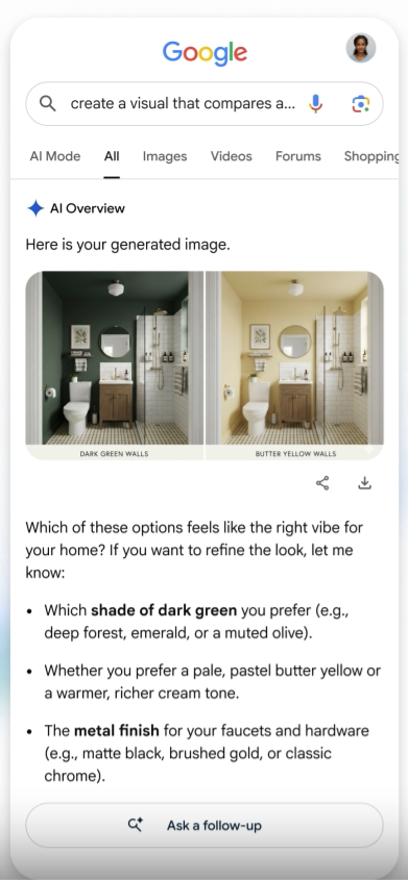
Google recently launched the ability to create images directly within AI Overviews using its latest Nano Banana model.
With AI Overviews already answering many queries without requiring a click, generated images expand Google’s ability to satisfy search intent directly within the search experience. Rather than directing users to published image content, Google can now create original visuals inside search results, reducing opportunities for websites to earn visibility and traffic from both text and image searches.
News updates and Top Stories inside AI Overviews
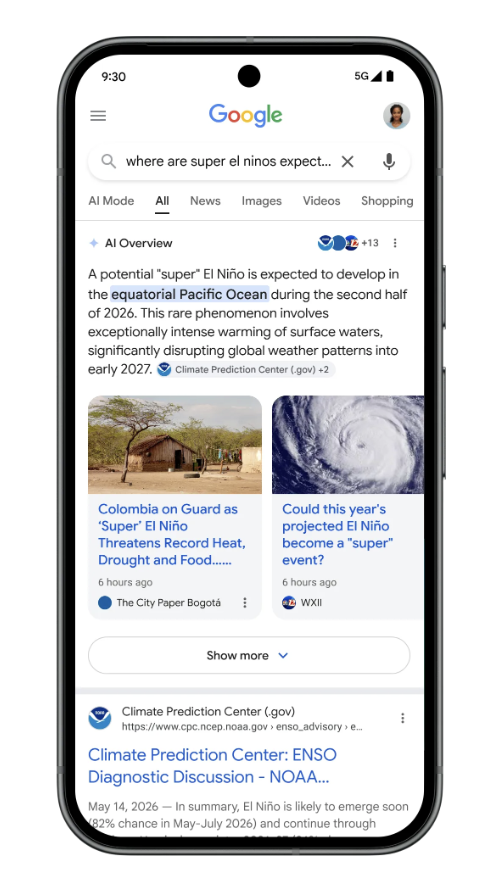
Google has also introduced Top Stories within AI Overviews for eligible searches.
Announced as part of Google’s “Fresh perspectives, new updates and prominent links” initiative, this feature highlights timely articles and Preferred Sources for developing topics. It creates another opportunity for news publishers to gain visibility and traffic directly from Google’s AI-powered search experience.
What marketers should do now
Google AI Overviews are reshaping how people discover and consume information, making them a permanent part of the search experience rather than a passing trend. While they are reducing clicks for many informational searches, they also create new opportunities for brands that produce original, authoritative content and optimize for AI-driven search.
Success is no longer just about ranking first in traditional search results. It’s about becoming a trusted source that Google’s AI can confidently reference and recommend. By investing in high-quality content, demonstrating expertise, and building a recognizable brand, marketers can improve their visibility in AI Overviews while continuing to drive qualified traffic as search evolves.
At DAC, we help brands build search strategies that perform across both traditional search and AI-powered experiences. From technical SEO and content strategy to AI Overview optimization, we help marketers build the authority, visibility, and trust needed to succeed as search continues to evolve. Let’s talk.